You are visiting briefly and will not leave Vietnam
Start by checking the rule for your nationality. Your passport may qualify for visa exemption, but the permitted period and conditions vary.
Vietnam visa 2026
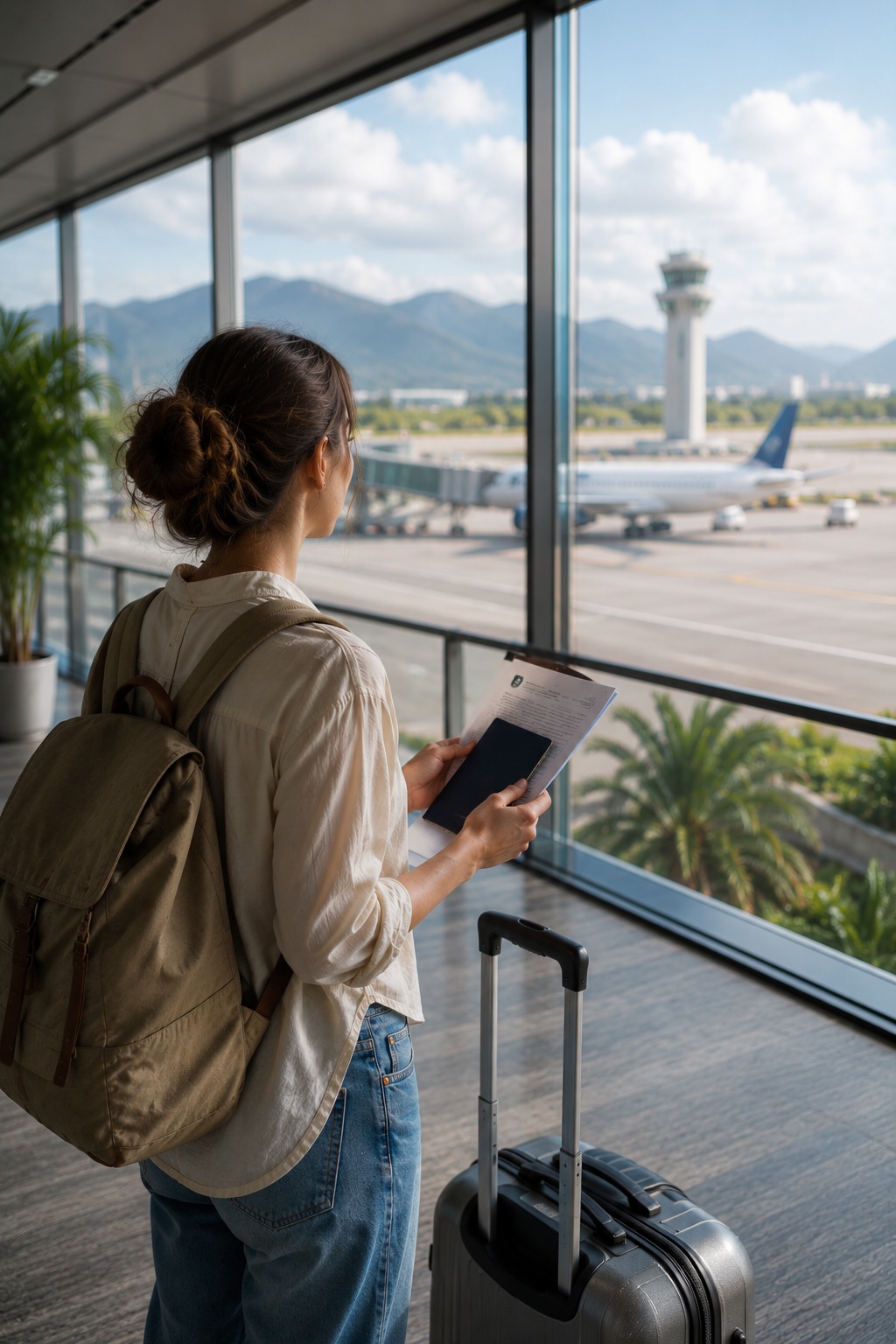
The answer depends on your passport, length of stay and route. Some travellers can enter visa-free, while others need a Vietnam eVisa before even a short visit. If you are already in Vietnam, a new eVisa cannot extend your current stay, so any departure and return must be planned separately.
Updated: August 2026
Official sources reviewed on 21 July 2026. This guide reflects current information from Vietnam's immigration authorities and official government travel guidance. Official eVisa portal: evisa.gov.vn.
Reviewed by Anton and Anna. We have lived in Nha Trang since 2023, provided visa assistance for more than two years and received over 200 approvals for clients from different countries.
You do not need a visa when your passport qualifies for Vietnam's visa exemption and your entire trip fits within the permitted period. The allowance varies by nationality. Travellers who do not qualify, or who plan to stay longer, will usually need an eVisa or another suitable entry document.
For example, US citizens normally need a visa, while holders of full British citizen passports can currently visit visa-free for up to 45 days. Other nationalities and passport types follow different rules.
Before applying, confirm your nationality, travel dates and every planned border crossing. A two-week holiday with no side trip is a different visa scenario from a journey that includes Cambodia or Thailand and a return to Vietnam.
Start by checking the rule for your exact passport. This helps you avoid paying for an unnecessary visa or discovering at airline check-in that your entry basis does not match the trip.
Visa exemption means that you do not need to apply for a visa before travel. Immigration records the final permitted date of stay at the border. You must leave by that date, and the arrival day counts as part of the permitted period.
The permitted stay may be 14, 21, 30, 45 or 90 days depending on nationality, passport type and the exemption that applies. Some passports have no general visa-free allowance. Certain agreements also limit the total number of visa-free days within a calendar year or rolling period.
Visa exemption suits a short trip that fits fully within the allowed period. If you leave and return, the next arrival is a new immigration decision. A previous visa-free entry does not guarantee another one, and repeated short exits do not create a right to remain in Vietnam indefinitely.
Passport validity and other conditions can also differ. Check the full rule for your own passport rather than relying on advice from someone travelling under another nationality.
A Vietnam eVisa is often the practical choice when your passport does not qualify for visa exemption, your stay is longer than the visa-free period, or your itinerary includes leaving Vietnam and returning.
The application is completed online, and a standard eVisa does not require an embassy visit. It can be valid for up to 90 days and may allow either single or multiple entry, but only the dates and entry type printed on the approved document apply.
The official personal application route is intended for foreign nationals outside Vietnam. A newly approved eVisa does not add days to the stay you already have. To use it, you must leave Vietnam and re-enter on the new document.
An eVisa can be used only at approved airports, land borders and seaports. Confirm your entry point before applying, especially for a visa run or overland crossing.
The start date is the first day the eVisa can be used. Approval does not allow entry before it.
The end date is the final day the document remains valid, and it does not move when you arrive later. If an eVisa runs from 1 August to 29 October, entering on 20 October does not create a new 90-day stay.
The entry type determines how many times you can use the document. A single-entry eVisa stops being valid once you leave Vietnam, even if its end date has not passed. A multiple-entry eVisa allows further entries only during its validity period.
The eVisa end date must be at least 30 days before the passport expiry date. Check this before choosing visa dates.
The official government fee is 25 USD for a single-entry eVisa and 50 USD for a multiple-entry eVisa. It covers processing and is not refunded after a refusal. Professional preparation, checks, corrections and urgent assistance are separate services.
Do not assume that every application will be completed within three working days. Clarification requests, inaccurate data, corrections and public holidays can cause delays. Apply early, and avoid non-refundable travel arrangements until the eVisa has been approved and checked.
Our standard service time is 7-10 business days from the first actual submission. After a case review, urgent options may be available within 3 working days, 2 working days, 1 working day, 4 hours, 2 hours or 1 hour. Urgent handling is not available for every application, so we first check nationality, current location, travel dates and application history.
A single-entry eVisa suits a trip with one arrival in Vietnam and no return after departure. Once you leave, you cannot normally use the same document again, even if its end date has not passed.
A multiple-entry eVisa suits an itinerary with trips outside Vietnam followed by one or more returns during the visa validity period. For example, you may visit Cambodia or Thailand and then enter Vietnam again.
Do not select multiple entry only "just in case." Build the itinerary first and compare every return with the visa dates. This avoids unnecessary cost and a document that does not fit the trip.
If you are already in Vietnam, an eVisa approved for a future trip can be used only after you leave and re-enter. It cannot be converted into an extension inside the country.
As your permitted stay approaches its end, confirm when you must leave, whether your next entry document is ready and which border point you can use. Going to the border without a confirmed basis for return may leave you waiting in another country.
A visa run is one possible route: you leave Vietnam and return under a new eVisa, visa exemption or another valid basis. The best option depends on nationality, departure city, available crossings and the time left on your current stay.
Our visa-run service covers routes from Nha Trang, Hanoi, Da Nang, Hoi An, Ho Chi Minh City, Vung Tau, Mui Ne and Phu Quoc. We choose the route after checking the documents and return basis, not simply the nearest border.
Receiving the PDF is not the final step. A single error can cause trouble at airline check-in or immigration. Before travelling, compare the eVisa with the passport and confirm:
If the document does not match the passport or route, do not expect airline or border staff to correct it. Check whether an amendment is possible or a new application is required.
The official application includes a process for a child under 14 who is included in a parent's passport. However, the technically available option is not always the clearest choice for travel.
Based on our experience, we strongly recommend an individual passport for every child, including an infant. If an eVisa is required, the child can then have a separate application whose details are checked directly against that passport.
This reduces uncertainty at airline check-in, immigration, on later trips, after route changes or when the accompanying adult changes. An individual passport does not remove a child's right to visa-free entry when it applies. It gives the family a clearer and more flexible set of documents.
Start by checking the rule for your nationality. Your passport may qualify for visa exemption, but the permitted period and conditions vary.
Apply early and leave enough time for review or correction. Do not wait until a visa-free stay is almost over when the document is needed for your route.
Compare single and multiple entry, and make sure every planned return falls within the approved dates.
Confirm your final permitted date and make sure the next entry basis is ready before choosing a visa-run route.
No. The rule depends on nationality and passport type. Some travellers qualify for visa exemption for a limited period, while others need an eVisa or another suitable entry document before travel.
Check the rule for your exact passport and planned stay. Exemption periods, passport conditions and total stay limits differ, so advice for another nationality may not apply.
Yes. US passport holders normally need a visa before travelling to Vietnam. For tourism, an eVisa is usually the simplest option and may allow single or multiple entry within the approved dates.
Holders of full British citizen passports can currently visit Vietnam without a visa for up to 45 days. The present unilateral exemption is scheduled to remain in force until 14 March 2028. For a longer stay, an eVisa may be suitable. Other British passport types can follow different rules.
No. Up to 90 days is the maximum. Only the start and end dates on the approved document apply.
The government fee is 25 USD for single entry and 50 USD for multiple entry. Assistance, corrections and urgent service cost extra.
No. A new eVisa cannot extend your current stay. The official personal application route is intended for foreign nationals outside Vietnam, and the approved document is used only after departure.
No. An eVisa can be used only at approved airports, land borders and seaports. Check the exact crossing before applying and before purchasing tickets.
It depends on the entry basis. For an eVisa, its end date must be at least 30 days before the passport expires. Visa-free entry and airline checks may involve additional conditions, so check the passport against the specific trip.
When a child has an individual passport and needs an eVisa, a separate application is submitted. Based on our experience, we recommend an individual passport for every child, including an infant, so the visa can be issued and checked independently.
There is no single rule for every nationality. A return counts as a new entry and remains subject to the applicable exemption and the decision of border authorities.
Do not wait until the final day. Confirm when you must leave and prepare a valid basis for return before choosing the route. Overstaying can lead to fines and other immigration consequences.
Check whether visa exemption or an eVisa applies to your passport and travel dates.
Open pageReview visa-free eligibility, stay limits and repeat-entry conditions.
Open pageCompare single-entry and multiple-entry eVisas for your itinerary.
Open pageCheck your passport, entry basis, travel documents and arrival preparation.
Open pageWe will review your nationality, travel dates, number of entries and current location. If you need an eVisa, we can help prepare the application and check the details before submission.
If you are already in Vietnam, we can also review a visa-run route and the documents needed for your return.