Practical relocation guide
Moving to Vietnam: What You Need to Know
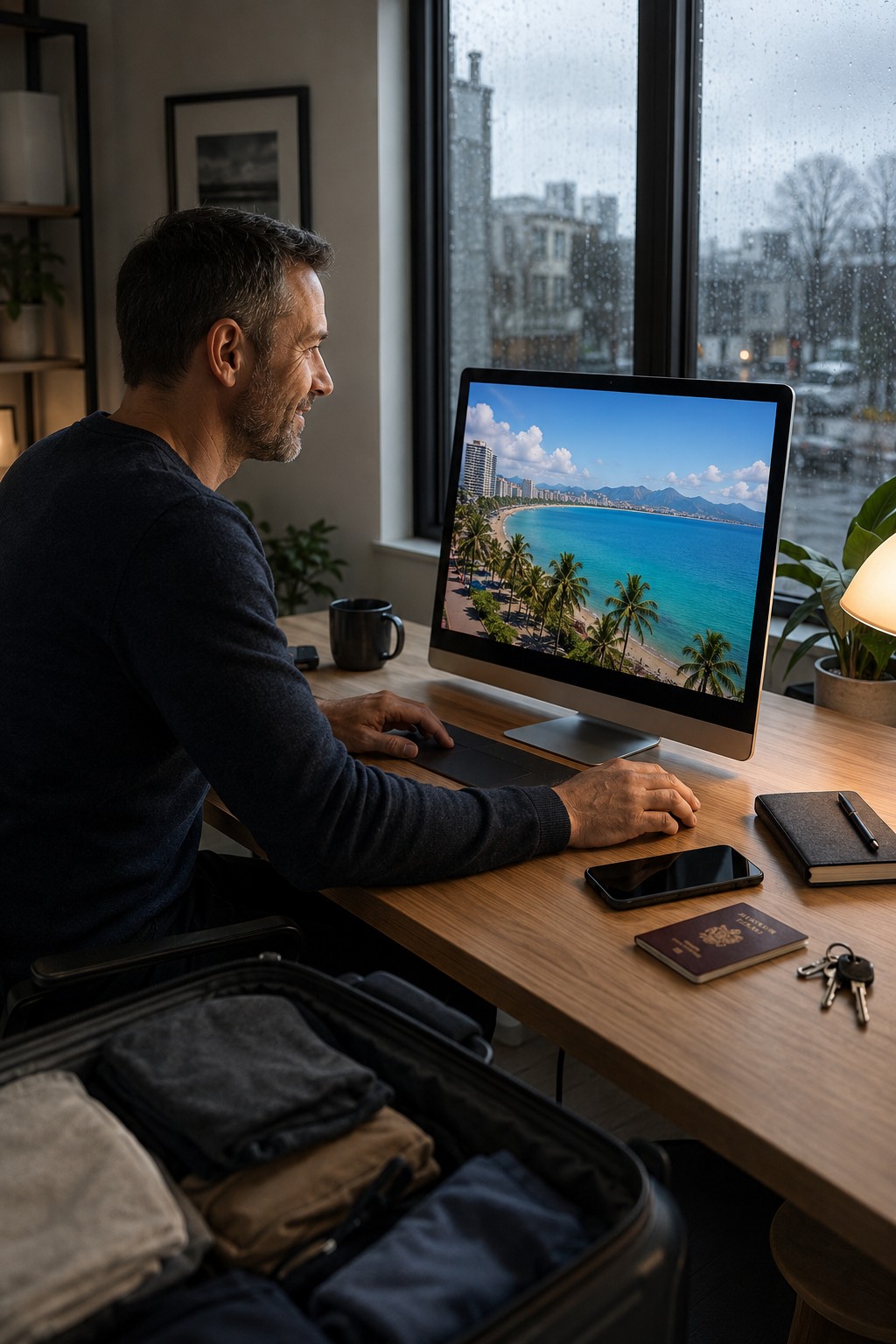
Moving to Vietnam is easier when the first trip is treated as a test, not as an irreversible decision. Use that time to see how the city, climate, neighbourhood, budget and everyday routine feel outside holiday mode.
Entry rules depend on your passport and travel plans. A Vietnam eVisa may be valid for up to 90 days and may allow single or multiple entry, but tourist entry is not permanent residence and does not automatically authorise local employment.
This guide covers the practical parts of moving to Vietnam: legal stay, preparation, budget, cities, long-term housing, remote work, children, pets and help after arrival in Nha Trang.
Updated: August 2026
Scenarios
Trial Stay, Seasonal Stay or Long-Term Move?
There is no single version of moving to Vietnam. Some people want to test the country for a few weeks. Others plan to spend several months here. A smaller group already has a clear professional, family or investment basis for staying longer.
A short trial stay
A short stay lets you test ordinary life before committing to a long rental or a major change of plans.
Use it to answer practical questions:
- Can you sleep and work comfortably in this city?
- Does the weather suit you during the actual season of your visit?
- Is your daily budget realistic?
- Which neighbourhood fits your routine?
- Do you prefer a beach city, a major urban centre or an island environment?
A place can be excellent for a holiday and still be wrong for everyday life.
Several months in Vietnam
A stay of several months needs more planning than a holiday. You need a legal entry route that covers the dates, temporary accommodation for the first period, a realistic housing budget and reliable access to money, communication and healthcare.
Do not rush into a long rental from listing photos. A lower price or shorter walk to the beach may not compensate for traffic noise, nearby construction, mould, poor water pressure or unreliable internet.
A longer relocation plan
A longer plan begins with the legal basis, not with a one-way ticket. A tourist stay can help you decide whether Vietnam suits you, but it does not create permanent status or a general right to work locally.
Before making long-term commitments, check the legal route, income plan, healthcare needs, schooling and housing requirements for your exact situation.
Step-by-step
How to Move to Vietnam: A Practical Step-by-Step Plan
- Define the purpose of the first trip.
Decide whether you are testing Vietnam for a few weeks, staying for several months or preparing for a longer move.
- Check the entry rules for your passport.
Visa exemption and eVisa rules depend on nationality, dates and the planned route.
- Choose a city for the season in which you will actually live there.
Weather, traffic and daily routine can change significantly across Vietnam and across the year.
- Build a starting budget.
Include preparation, temporary accommodation, the first rental payment, deposit, household setup and an emergency reserve.
- Book temporary accommodation.
Give yourself enough time to compare neighbourhoods and inspect long-term options without pressure.
- Prepare money and account access.
Keep a backup payment method and make sure your bank, email, messaging apps and recovery codes remain accessible abroad.
- Plan the first arrival tasks.
Arrange the airport transfer, check-in, mobile connection and essential purchases.
- Live in the city before signing a long lease.
Test the commute, noise, shops, healthcare access and normal daily distances.
- Inspect the exact property.
Check water, mould, internet, mobile signal, construction, building access, utilities and deposit terms.
- Test the work setup.
A general promise of Wi-Fi is not enough. Test the connection in the room where you will work.
- Review the basis for staying longer.
A tourist entry route is not a permanent status and does not automatically authorise local employment.
- Make long-term decisions after the trial period.
Choose a longer rental, school, work arrangement or legal route after you understand the real conditions.
Visas and status
Can Foreigners Move to Vietnam Permanently?
An eVisa is a temporary entry and stay document, not a permanent residence permit. Repeated tourist entries do not automatically create permanent resident status.
Vietnam has separate legal routes for employment, family, investment, temporary residence and permanent residence. Eligibility depends on the person's circumstances and the law that applies at the time.
A first stay can help you decide whether Vietnam fits your life. A permanent plan requires a separate legal basis.
Visas and Legal Stay When Moving to Vietnam
Your entry option depends on your passport, travel dates, intended length of stay and number of entries. Some travellers may qualify for visa-free entry. Others may need an eVisa before departure.
A Vietnam eVisa may be valid for up to 90 days and may allow single or multiple entry. If you plan to leave Vietnam and return during the same visa-validity period, check whether multiple entry is required.
Tourist entry does not by itself give a general right to work for a Vietnamese employer. Local employment normally requires the correct legal basis, such as a work permit or a recognised exemption.
A person already inside Vietnam should not assume that a new eVisa will extend the current stay without leaving the country. The next route must be checked separately.
Preparation and budget
What to Prepare Before Moving
Documents and travel access
Check the documents required for your passport, route and family situation. Keep secure digital copies of essential documents and make sure names and dates match across bookings and travel records.
Use the Vietnam Entry Checklist for the full pre-departure document check.
Money and backup access
Prepare more than one way to access money. A card may be blocked, lost or rejected, and an account may request a verification code that you cannot receive abroad.
Before departure:
- confirm that your bank and email accounts work from a new country;
- save recovery codes securely;
- keep a backup payment method;
- avoid depending on one phone number or one bank card;
- know how you will receive urgent account confirmations.
Medicines and optional insurance
Bring the medicines you expect to need during the first period. Check any restrictions that may apply to prescription or controlled medicines.
Travel insurance is optional. It can be arranged before departure or after arrival when a suitable policy is available. Before relying on a policy, check:
- coverage;
- exclusions;
- financial limits;
- the clinic network;
- emergency contact procedures;
- whether direct billing is available.
Temporary accommodation
Book temporary accommodation before choosing a long-term rental. This gives you time to compare neighbourhoods, inspect properties and understand transport, shops, noise and daily distances.
How Much Money Do You Need to Move to Vietnam?
There is no honest universal budget. The amount depends on the city, neighbourhood, housing standard, travel season, family size and lifestyle.
A useful starting budget has four parts.
| Budget group | What to include | When it is usually needed |
|---|---|---|
| Preparation | Documents, flights, visa-related costs, temporary accommodation, insurance when chosen, luggage and equipment | Before departure |
| Arrival | Transfer, mobile connection, local transport, food and essential purchases | First days |
| Long-term housing | First rental payment, deposit, utilities, internet, parking, household setup | When moving into the property |
| Emergency reserve | Extra accommodation, a changed flight, medical costs, account problems or an urgent return | Kept separate |
Build the budget from real quotes
Use actual flight prices, a real temporary booking and current rental options in the city you are considering. Do not build the plan from a national average that may combine very different cities and housing standards.
For housing, ask:
- how much must be paid before moving in;
- whether the deposit is refundable;
- which utilities are separate;
- how electricity and water are calculated;
- whether internet, parking and cleaning are included;
- what happens if the agreement ends early.
Keep an emergency reserve
Do not commit every available dollar before you have lived in the city. A reserve may be needed for a longer temporary stay, a change of apartment, a medical expense, a new flight or an account problem.
The most useful budget is not the lowest possible number. It is the amount that lets you change a bad decision without creating a crisis.
Cities and housing
Where to Live in Vietnam
The right city depends on the life you want, not on a universal ranking. Compare climate, city size, traffic, beach access, healthcare needs, work routine, seasonality and housing choice.
| City | May suit you when | Check carefully |
|---|---|---|
| Nha Trang | You want a coastal city, a relatively compact routine and easy beach access. | Seasonal rain, tourist areas, traffic noise, construction and the exact neighbourhood. |
| Da Nang | You want a larger coastal city with different beachside and central districts. | Daily travel distances, seasonal weather and the difference between neighbourhoods. |
| Ho Chi Minh City | You want a major business city with a wide choice of services and urban activity. | Traffic, commute time, heat, noise and the absence of a city-beach lifestyle. |
| Hanoi | You want capital-city life, culture, business activity and more distinct seasons. | Dense traffic, air quality, winter weather and long daily travel times. |
| Phu Quoc | You want island life and a tourism-oriented environment. | Seasonality, transport, housing choice and access to services outside the main areas. |
We have lived in Nha Trang since 2023.
For long-term living, the neighbourhood matters more than the distance to the beach.
A home near the sea may still be a poor choice when the street is noisy, the building is difficult to access, construction is nearby or the daily route to work, school and essential services is inconvenient.
Long-Term Housing in Vietnam
Start with a temporary booking, then inspect the exact property in person or request a detailed video walkthrough.
Check:
- daytime and nighttime noise;
- nearby construction;
- mould, humidity and smell;
- water pressure and hot water;
- air conditioning and ventilation;
- fixed internet;
- mobile signal in the intended work room;
- doors, windows and building access;
- lift or stair access;
- parking;
- rubbish collection;
- utilities and meter readings;
- deposit and cancellation terms;
- furniture, appliances and household equipment.
Record the condition of the property with photos and video before moving in. Confirm payments, utilities, deposit conditions and agreed repairs in writing.
Practical housing help may include a visual walkthrough, rental selection and accompaniment during viewings. It does not include legal lease review, ownership verification or an engineering inspection.
Remote work
Remote Work and Income
Moving without a reliable income plan is risky. Before choosing a city or signing a rental, check how your work will function from Vietnam.
Time zone
Compare Vietnam time with your employer, clients and family. A schedule that looks manageable on paper may become difficult when meetings happen late at night or early in the morning.
Connection quality
Ask which internet provider serves the property and test the actual connection. Check:
- download and upload speed;
- stability during video calls;
- the signal in the intended work room;
- router location;
- mobile-data backup.
Mobile coverage may vary inside the same building, so test the exact apartment before signing a long rental.
Account access
Keep backup access to:
- banking;
- email;
- messaging;
- cloud storage;
- two-factor authentication;
- recovery codes.
Legal status
Practical ability to work online is not the same as confirmation of immigration, tax or employment status. Tourist entry does not automatically authorise employment by a Vietnamese company.
For local employment or a complex international work arrangement, obtain appropriate professional advice.
Family and pets
Moving to Vietnam with Children
A family move requires more than choosing a larger apartment.
Check each child's passport and visa route separately. Prepare the family or consent documents required for the journey, especially when surnames differ or a child travels with one parent or another adult.
Plan:
- healthcare and medicines;
- the preferred school or education format;
- the language of instruction;
- travel time between home and school;
- access to food, shops and daily services;
- the child's tolerance for heat, traffic and noise;
- safe access to the building and neighbourhood.
Choose the school and home together. The daily journey between them may affect family life more than the distance to the beach or city centre.
Our practical help does not include school placement or legal review of family documents.
Moving to Vietnam with a Dog or Cat
Pet-entry requirements depend on the animal, departure country, transit route, airline and point of entry.
- Confirm carriage with the airline.
Check the booking procedure, carrier or cabin rules, weight limits and transit restrictions.
- Check veterinary and quarantine documents for the exact route.
Do not rely on a checklist copied from another traveller.
- Find genuinely pet-friendly housing.
Confirm the owner's approval and the building's rules before paying.
- Prepare the arrival transfer and backup accommodation.
Make sure the driver and temporary property accept the animal.
Our practical help does not include preparation of veterinary documents. Housing and transfer availability must be checked for the individual situation.
Local help
How We Can Help with Your Move to Vietnam
Our help is practical and task-based. It does not include permanent residence, work permits, job placement, school placement, legal lease review or veterinary-document preparation.
Before travel
Housing in Nha Trang
Arrival and first days
Local SIM assistance is available after arrival and check-in. Nha Trang Nanny is practical assistance for adults, not childcare, medical care or an emergency service.
When you are already in Vietnam
A separately checked visa-run route may be relevant when a person needs to leave Vietnam and return on a new legal basis.
Frequently Asked Questions
Can I move to Vietnam permanently on an eVisa?+
No. An eVisa is a temporary entry and stay document. A longer legal status requires a separate basis and procedure.
How long should my first trial stay in Vietnam be?+
There is no single correct length. Stay long enough to experience normal daily life, inspect neighbourhoods, test the budget and see the city during the actual season.
How much money should I prepare before moving to Vietnam?+
Calculate preparation, arrival, long-term housing and an emergency reserve. Use current quotes for your city and housing standard instead of a universal monthly figure.
Which city is best for a first stay in Vietnam?+
Choose according to your routine. Nha Trang and Da Nang suit many people seeking coastal life. Ho Chi Minh City and Hanoi offer larger urban environments. Phu Quoc may suit people who understand island seasonality and service limits.
Should I rent long-term accommodation before arriving?+
Usually, temporary accommodation is safer. It gives you time to inspect the property, compare neighbourhoods and confirm the rental terms before paying a deposit.
Can I work remotely while staying in Vietnam?+
You may be able to work online in practical terms, but that does not automatically confirm your immigration, tax or employment status. Local employment normally requires the correct legal basis.
Can I move to Vietnam with children?+
Yes, but plan the passport and visa route, family documents, healthcare, education, neighbourhood and daily travel distances for each child.
Can I bring a dog or cat to Vietnam?+
It may be possible, but the requirements depend on the departure country, transit, airline, animal and point of entry. Confirm the exact veterinary, quarantine, transport and housing conditions before booking.
Need practical help with your move to Vietnam?
We can help you check the visa route, prepare accommodation for the first days, arrange an airport transfer, organise local SIM assistance and handle practical tasks in Nha Trang.
The focus is on clear tasks before departure and after arrival, so your first days in Vietnam are easier to manage.